
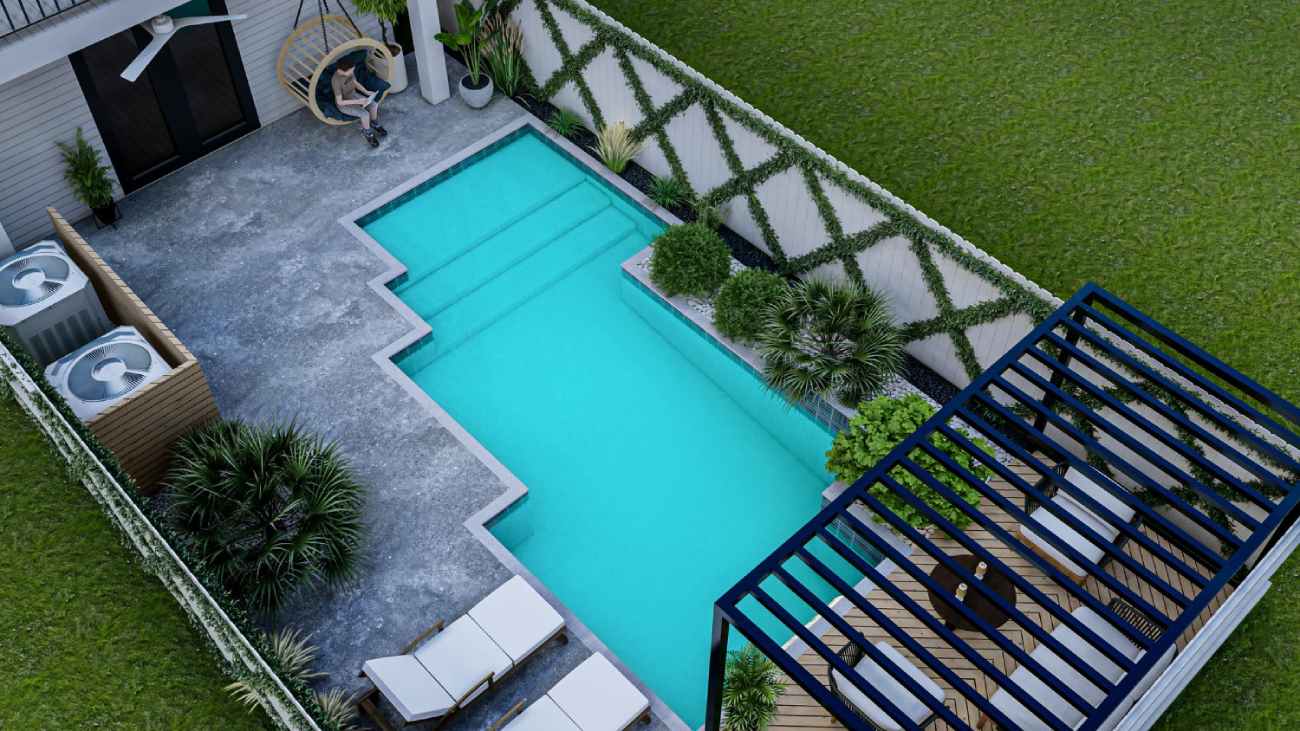
Choosing a properly designed patio can transform your backyard area. Instead of having a bland and unproductive space outdoors, you will be able to have a space where you can relax, eat, socialize, or spend time near the water.
If you are considering a patio design in Miami FL, the best design depends on many factors, including the size and layout of your property, your lifestyle, and the local South Florida climate. The patio should not just look good in the pictures. It should be practical and comfortable to use, and should be cohesive with the rest of your outdoor space.
At Pool Deck Pros, we help homeowners plan outdoor spaces that work naturally with their homes, swimming pools, pool decks, landscaping, and other backyard features.
Custom Patio Design for Miami Homes
Every backyard is unique. Various factors such as the dimensions of the area, house position, presence of a pool, landscaping, access points, and purposes of use can influence how the patio will be designed.
A custom approach lets you develop the patio in accordance with the ways you want to use your backyard.
You can design your patio to include areas for:
- Outdoor dining
- Sitting lounge
- By-the-pool relaxation
- Family gathering
- Entertaining guests
- Outdoor cooking
- Outdoor shaded seating
- Landscaping
- Walking Pathways
- Access to the pool deck
The challenge when implementing each space is to make all of the sections seem part of one structured backyard.
Patio Design Ideas for Miami Outdoor Living
For Miami homeowners, the patio planning process offers numerous options. Depending on the layout of the property and the outdoor living area, choosing the right design will more or less depend on what activities and features you want to dedicate the space to.
Poolside Patio Layout
If you have a pool, the patio area can be transformed into an extension of the poolside area. There can be comfortable seating, dining space, landscaping, and shading around the pool without disturbing the flow of the pool's circulation.
Outdoor Dining Patio
If you are someone who enjoys eating outside, the patio can provide a specially designed dining area that contains a table, chairs, and enough space to move around comfortably.
Entertaining Patio
A large patio can be split into several areas for entertaining guests. One area might be used for dining while another provides lounge seating or access to an outdoor kitchen.
Small Backyard Patio
A smaller property does not necessarily need to sacrifice functionality. With proper planning, the space can be used effectively while remaining user-friendly and comfortable.
Covered or Shaded Patio
A properly shaded outdoor space can be used to create a pleasant outdoor environment that can provide protection from the strong Florida sun. Depending upon the place and design, options can include pergolas, gazebos, patio covers, or landscapes.
Patio Design Around a Swimming Pool
For many Miami properties, the patio and swimming pool are the center of the backyard.
When these features are designed together, the result can feel much more cohesive. The patio can be used to create areas for relaxation and entertaining guests, while the pool deck allows movement in and around the swimming pool.
The design overall should include the following considerations:
- Pool access
- Walking paths
- Seating areas
- Drainage system
- Choice of materials
- Landscaping
- Providing shade
- Outdoor furnishings
- Safety
While planning pool construction, it could be very helpful to concentrate on the patio as well, rather than treating it as a completely independent project.
Choosing Patio Materials
As for the materials used for the patio, their choice can have a major influence on its appearance and the way it works.
The materials usually used for patios include concrete, pavers, tiles, natural stone, and other types of materials that can be used outdoors.
Concrete
Concrete is a very versatile and uniform surface used for patios, and there are many design options available.
Pavers
Different patterns and designs can be utilized for the pavers to make them perfect for decorations, creating borders, zones, and visual transitions.
Tile
Outdoor-rated tile can provide a complete appearance when used properly with the right products and to enhance certain architectural designs.
Natural Stone
Natural stone helps to achieve a unique look and serves well for homeowners envisioning a more natural design aesthetic.
There is no single material that's ideal for every patio design miami. The choice must be made based on appearance, planned usage, care, cost, and location.
Designing for Miami's Outdoor Environment
Patio design in Miami, FL must be determined by the climate in the area.
Outdoor areas can be exposed to the sun, humidity, heavy rains, and tropical storms. Thus, in this case, such elements as drainage, choice of materials, and surface preparation, as well as shading, become very important.
A good design considers how the patio will perform in everyday conditions, not just how it will look when newly installed.
Patio Drainage and Water Management
Drainage should be considered from the beginning of a patio design.
Heavy rainfall can quickly expose problems with water flow. The patio layout, surface slope, surrounding areas, and existing drainage should be evaluated before construction.
Miami-Dade County has specific requirements relating to certain impervious-surface improvements, including concrete slabs, pavers, patio replacements, and pool-deck work in applicable areas.
This means homeowners should not assume that every patio improvement is treated the same way from a permitting or site-planning perspective.
Patio Design With Shade and Outdoor Features
Adding extra outdoor elements to a patio can contribute greatly to its functionality.
Depending on your home or project, you may need to consider:
- Pergolas
- Gazebos
- Patio covers
- Outdoor kitchen areas
- Fire features
- Water features
- Built-in seating
- Exterior lighting
- Planters
- Pool lounge area
All these features must be installed in accordance with the design scheme of the patio, not added spontaneously after it is built.
For example, a pergola should be installed over the sitting/dining area, while an outdoor kitchen can be installed closer to the house for easier access.
Creating Different Zones in Your Patio
One good strategy for patio design is to divide a large space into functional areas.
Instead of having all the furniture positioned in a single open space, it would be better to create distinct zones used for different purposes.
For example:
Dining Zone: A table with chairs set for open-air meals.
Lounge Zone: Cozy seating made for lounging and resting.
Poolside Zone: Places to sit by the pool.
Cooking Zone: An outdoor kitchen or barbecue area to cook outside.
Shade Zone: A space that is comfortable and sheltered from the sun.
All the mentioned zones can seem connected if similar building materials and landscape design are used.
Patio Design for Small Miami Backyards
Designing a small backyard requires careful planning.
The aim of the patio design is not to include as many different features as possible. Instead, the design should focus on the features that will be used the most.
Designing built-in seats, using the right furniture, simple material patterns, and incorporating multifunctional space can make a small patio more useful without making the space feel crowded.
It is also important to carefully design the patio around pathways and entrances to prevent wasting valuable space.
Large Backyard Patio Design
Big properties provide design opportunities that small ones do not.
The oversized patio space can look barren if everything sits in one huge, open place. Creating separate zones makes an area seem more intentionally designed.
For example, a large backyard can have a poolside relaxation area, outdoor dining zone, kitchen, covered seating, and landscaped transitions.
The separate zones should still utilize the same design so that the backyard feels like one whole space.
Patio Design and Landscaping
The proper landscaping design can mitigate the influence of hard materials and connect the patio with the rest of the backyard.
Various plants, flower beds, trees, decorative items, and other landscape components can be placed on the patio to make visual connections.
While designing landscaping, you should take into account the size of plants when mature (not the original size), how to maintain them, what irrigation and drainage systems to install, as well as how much sunlight vegetation will get and how it interacts with the patio itself.
The main aim is to make the patio more appealing instead of creating a maintenance hassle and drainage issues.
Patio Design and Miami-Dade Permits
Permit requirements differ based on the scale of the project, the location of the property, and the type of improvement needed.
The Miami-Dade County website states that alteration, construction, and some kinds of exterior improvements require permits. It also notes that municipalities within Miami-Dade County have their own building officials and permitting processes.
Some improvements may qualify for specific exemptions. Presently, the Miami-Dade 2026 information provides certain exemptions for residential properties, for instance, some open patios, pavers, concrete slabs, and walkways. Nevertheless, these exemptions need to meet various conditions and cannot be applied to every project.
For example, patio covers can have different types of permit requirements. Miami-Dade currently states that permits are required for aluminum terrace/patio covers and related projects.
Before starting any construction work, homeowners are advised to check the current requirements related to the property and municipality.
Our Patio Design Process
Successful completion of a patio project starts with understanding the homeowner’s goals related to the project.
1. Discuss Your Ideas
We begin with understanding how you would like to use the patio. It can be a poolside retreat, an outdoor dining extension of the house, an entertainment area, or a complete backyard transformation.
2. Evaluate the Space
You should analyze how big the patio should be and which landscaping solutions, including a drainage system and facilitating access, should be considered.
3. Develop the Layout
The layout of the patio is determined based on the available space and the activities to be performed.
4. Select Materials
Surface materials, finishes, colors, textures, and complementary items are taken into account when making the overall design.
5. Coordinate Outdoor Features
Also, other features such as the swimming pool, outdoor kitchen, gazebo, patio, garden, and decoration can be included in the design.
6. Review Project Requirements
Check the requirements of building permits and construction zoning, etc before the start of the project.
7. Move Into Construction
When the design and permit requirements have been finalized, patio construction can begin.
Patio Design for Complete Backyard Transformations
A patio can serve as a base for a bigger outdoor project.
If you are planning for your backyard renovation, it makes sense to include your patio along with other elements, such as:
- Swimming pool construction
- Swimming pool renovation
- Swimming pool resurfacing
- Outdoor kitchens
- Water features
- Gazebos
- Pergolas
- Landscaping
Planning several components together can reduce inconsistencies in the design and improve the quality of the transitions between the different areas.
Patio Design vs. Patio Remodeling
If you think of patio design and patio remodeling as the same concepts, think again, because both projects address different issues.
Patio design refers to creating an entirely new design for an outdoor area.
Patio remodeling aims to upgrade a previously constructed patio whose features are not impressive enough and need changes to either its layout, materials used, surface condition, etc.
Some homeowners may need a combination of both. For example, an existing patio may be remodeled using a completely new layout and material selection.
How Much Does Patio Design Cost in Miami?
There is no one-price-fits-all for patio design and installation. Pricing for patio jobs depends on the size of the patio, complexity of the design, materials used, condition of the area, existing structures, drainage needs, and additional outdoor elements.
The best way to determine what the property needs, get a practical scope, and cost of the patio is to evaluate the project.
Why Professional Patio Design Matters
Creating outdoor patio space could seem like a piece of cake, but the whole process involves many considerations that are vital to get the desired result.
A qualified patio builder with a professional design approach could help with the layout, materials, drainage, pool area, landscaping, and furniture, among many decisions before any building work starts. This is especially relevant in terms of big yard projects where many details need to be taken into consideration.
At Pool Deck Pros, we boast years of experience in designing both exquisite and practical outdoor spaces. We strive to create patios that blend effortlessly with your backyard features so that they complement your home.
Design a Patio Around the Way You Live
The perfect patio doesn’t have to be the biggest or the most costly one; it can be the one that suits you best and complements your yard. Whether you need solitude by the pool, a dining area outside, a spot for family reunions or entertaining guests, a well-designed patio will help you achieve your vision.
If you are searching for patio design in Miami FL, get in touch with Pool Deck Pros to discuss your project and find out about your options for your patio project.
Frequently Asked Questions
What is patio design?
Patio design is a process to design an outdoor patio, which involves how the space will look, what materials will be used for the construction, etc., before any construction work begins. Patio design also considers how the patio will be used and how the area will be connected to the rest of the property.
What should I consider when designing a patio in Miami?
There are various aspects to take into account when designing a patio, such as the size of the space, its intended purpose, building materials, drainage system options, natural light and shadow, swimming pool and landscaping, placement of patio furniture, and all the permits homeowners need who want to build.
Can I design a patio around an existing pool?
Yes, a patio can be constructed adjacent to a pre-existing swimming pool and deck area. However, the design of the patio needs to consider how the space will be connected to the existing pool area.
What patio material is best for Miami?
There is no universal best material. The right choice depends on your budget, style, maintenance preferences, and how you plan to use the patio. Concrete is durable and versatile, pavers offer design flexibility and easy repairs, tile provides a polished look with many style options, and natural stone delivers a distinctive appearance.
Can a patio include a pergola or gazebo?
Yes, both features can be incorporated in the patio design. However, the design, location, building code, and permit requirements must be looked at before any construction work can begin.
Do I need a permit for patio construction in Miami?
The permit requirements will depend on the project and the specific property on which the work is taking place. Certain residential patio and paving changes can be exempted, while other works sometimes need permits. Miami-Dade County advises homeowners to check the requirements before starting any building work.
Can patio design include outdoor kitchens?
Yes, the design of a patio can include an outdoor kitchen if needed. In addition, you should take into account things such as plumbing, electrical connections, fixing gas pipes, as well as the type of patio being installed.
How do I start planning my patio?
When starting the planning process, one should determine the use of the proposed patio. The area size, existing swimming pool features, and landscaping will all have an impact on the materials to be used and shade requirements.